Why location changes the rebuild
The South Platte runs north through the Littleton area, and several creeks and gulches feed it from the east and west. The river's 1965 flood is part of local history and one reason Chatfield Dam was built upstream. Today most basement water in Littleton comes from plumbing failures, sewer backups and surface runoff rather than river flooding, but properties near mapped floodplains still face extra review when they are repaired.
If a building is in a mapped flood hazard area, the local floodplain administrator may need to review repairs, and substantial damage rules under the National Flood Insurance Program can require a damaged building to be brought into compliance with floodplain standards when repair costs reach a set share of the building's value. Whether that applies depends on the map, the building and the jurisdiction's own rules. Ask the city or county before assuming either way.
Even outside mapped areas, low lots near drainageways, homes at the bottom of a slope and walkout basements facing a creek can see water again. That affects which materials make sense for the rebuild.
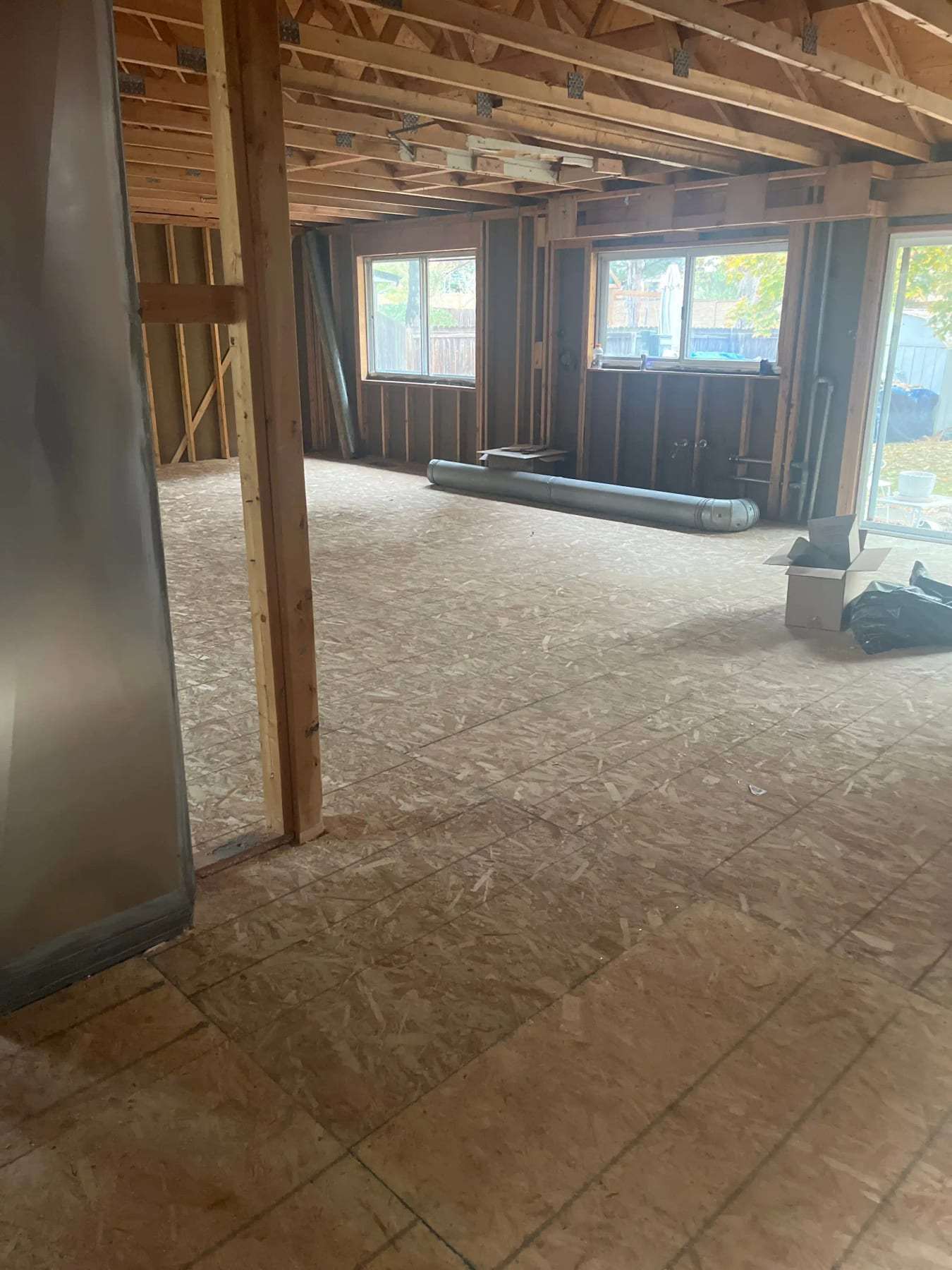
Basement stripped to the framing with a new subfloor and furnace ducting. One example of what this stage can look like; it is not a job connected to this site.
Choosing how to rebuild a lower level
Use these as starting points for a conversation with your contractor and building department.
- IfYour lot is in or near a mapped flood hazard areaThenContact the floodplain administrator for your jurisdiction before ordering materials or applying for permits.
- IfThe basement has flooded more than onceThenConsider moisture-tolerant materials: tile or vinyl over carpet, raised bottom plates, cement board at the base of walls.
- IfThe water entered through a floor drain or toiletThenAsk about a backflow prevention device and whether your policy covers sewer backup separately.
- IfWater came through window wells or a walkout doorThenLook at grading, window well covers and drainage outside before finishing the inside.
- IfThe house is well uphill from any drainageThenStandard finishes are usually fine; focus on fixing the plumbing source.
A sensible order of work
- First
- Confirm the water source is fixed and drying is documented.
- Before design
- Look up flood maps for the address and ask whether floodplain review applies.
- Before permits
- Decide on material changes and any exterior drainage work.
- During rough-in
- Keep electrical outlets, furnace and water heater controls in mind if raising them is advised.
- Before finishes
- Have moisture readings rechecked on the slab and bottom plates.
General information for Littleton, not a quote or professional advice. In an emergency, call 911.